





What Players In Canada Look For In 2026
Most people do not join a casino platform for slogans. They want registration to feel simple, payments to look clear, and payouts to make sense from request to release. In 2026, that matters even more because players compare gaming products with the speed and clarity of everyday digital services.
Imagine opening an account after work with only a short window to play. You are not looking for a lesson - you want to complete the basics, understand the cashier, and know what may be required later. That is why clear account setup and visible limits usually matter more than flashy design.
For users in Canada, trust often comes from transparency. How much can you add? What may be reviewed before money is released? Which methods feel easiest for repeat use? A good platform answers those questions early.
Getting Started Without Missing A Verification Step
Registration usually begins with standard personal details, then confirmation that the player meets the legal age requirement in their province or territory. Many people go straight to funding the account, but the smarter move is to check the profile area first and see whether any identity or address confirmation may be needed later.
Picture opening an account during a lunch break, skipping profile checks, and returning later only to find that an extra confirmation is needed. That small gap can create real frustration, even when the request itself is routine. Usually, the smoothest path is simple: enter accurate information, keep documents readable, and make sure your chosen payment method belongs to you.
How Registration Usually Feels On A Busy Evening
Picture a player in Montreal signing up on a phone while travelling home. They fill in the form, get distracted, come back, and cannot remember whether email or phone confirmation was finished. A clean setup helps because it pushes one clear next step instead of three competing prompts.
The practical way to handle registration is to finish identity basics first, then review limits, then move to deposits. It feels slower for a moment, but it reduces interruptions later.
Deposits, Limits, And Budget Control
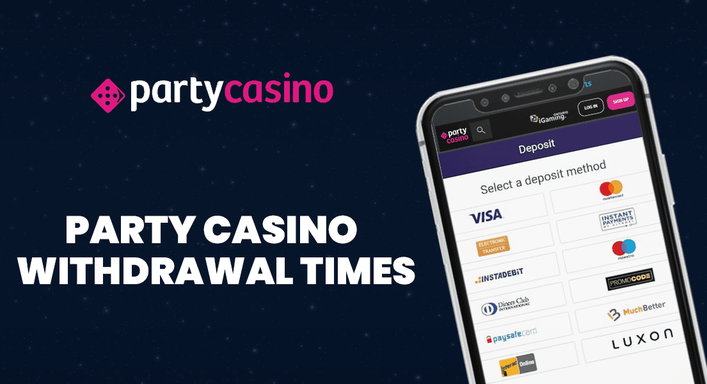
Payment choice affects more than convenience. It shapes how you track spending, how often you top up, and how easy it is to keep entertainment money separate from daily expenses. Some players prefer cards because they already use them everywhere. Others like wallet services because the balance feels easier to monitor.
If you usually play in short sessions, a smaller preset amount often works better than one large transfer. Imagine loading too much on a Friday night because the lobby looks tempting, then wishing you had stopped earlier. Limits are useful because they replace mood with a number you already accepted.
Promotions can also influence deposits, but they should not dictate them. A deal has value only when it fits your normal routine rather than pushing you beyond it.
Choosing A Payment Route That Fits Your Routine
A player who deposits once a month acts differently from someone who funds several short sessions each week. Imagine one user planning a single Saturday session and another jumping in for twenty minutes after work. If you prefer one planned evening, a direct bank method or card can feel simple, while smaller repeat sessions may suit a separate wallet better.
Think beyond the first deposit. Players are usually happiest when the same route also makes sense later when they want funds returned, because fewer mismatches often means fewer questions.
When A Wallet Service Makes More Sense Than A Card
Some users like the extra layer a wallet service gives them. It can reduce manual entry, feel cleaner on mobile, and create a bit of distance from the main bank account. For regular players, that convenience can matter.
Imagine finishing work, opening the app, and wanting checkout to take seconds rather than minutes. A wallet may suit that habit well. It is not automatically the best option, but it often fits players who value speed and separation.
Cashout Flow And Processing Stages
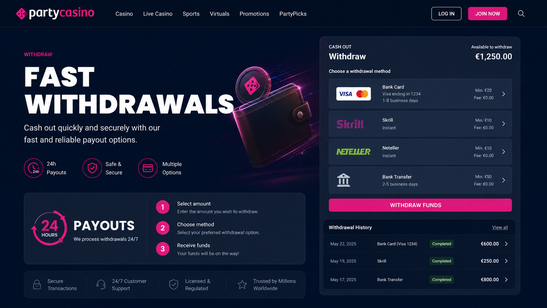
When players think about payouts, they usually focus on the final arrival of funds. The middle steps matter just as much. A request may pass through review, method checks, and release before the money reaches the player. Without that context, normal waiting can feel like a problem.
Imagine finishing a strong session late at night and sending a request immediately. The status may stay pending until the next review window, especially if the method needs matching details or the account is being checked for the first time. That does not always mean something is wrong.
A careful routine helps here: confirm that profile data matches the payment details, check whether any document request appeared, and avoid changing the request repeatedly unless necessary.
Stage | What Usually Happens | Why It Matters | What The Player Should Check |
|---|---|---|---|
Request sent | The amount and method are confirmed | The payout enters the queue | Selected route, amount, and status note |
Review | The account or transfer may be checked | This protects the transaction flow | Profile accuracy and readable documents |
Release | Funds are approved for transfer | The request leaves internal control | Whether the chosen route is still active |
Arrival | The money reaches the destination | Final timing depends on the method | Wallet history or bank posting time |
Why Pending Status Does Not Always Mean A Problem
Pending can look alarming, especially after a larger win. Yet in many cases it simply means the request is waiting for review or the next processing cycle. Players sometimes assume something is wrong after a short delay, even when the selected method is not designed to move instantly.
Suppose you request funds on a weekend evening and expect the same speed as a card purchase in a shop. That expectation is understandable, but outgoing payments follow a different path. A calm check is better: look for messages in your account area, confirm whether any extra step appeared, and avoid cancelling unless you truly need to change something.
Return Offers, Missions, And Value
Money-back style promotions appeal to players because they soften a rough session without promising unrealistic outcomes. Used well, they add structure. Used badly, they tempt people to spend more just to unlock a reward.
Imagine seeing a Sunday offer and deciding to extend play only to qualify. If the extra spending goes beyond your original plan, the reward has already lost part of its value. A better habit is to start with your normal budget and treat any extra return as a bonus, not a target.
Read the conditions carefully. Game category, qualifying period, caps, and playthrough requirements can all change whether the offer is genuinely useful for your style.
Responsible Play Tools That Matter In Real Life
The best safety tools are the ones players use before emotion takes over. Deposit caps, session reminders, cool-off periods, and longer breaks create distance between impulse and action. That matters after losses, but it matters after wins too, when confidence can become expensive.
Consider a player who doubles a small balance and suddenly feels unstoppable. Instead of pushing harder, they use a reminder, step away, and look at what they planned to spend in the first place. That tiny pause can change the whole night.
For adults in Canada, safer play tools are not background features. They are part of a practical routine that keeps entertainment from turning into stress.
Using Time-Outs Before Decisions Get Expensive
A short break can be more useful than a long lecture. If you notice redepositing faster than planned, chasing losses, or refreshing the cashier every few minutes, a time-out interrupts the pattern before it grows.
Picture someone saying, "I will just win it back in one more session." That is often the sign to stop. The smarter move is to take the break immediately and return later with a clear head.
Support, Troubleshooting, And Next Steps
Even a strong platform will create questions. A document may upload badly, a payment route may stop working, or a request may remain unchanged longer than expected. The difference between a frustrating experience and a manageable one is often preparation.
Imagine opening support chat and typing only, "Where is my money?" That happens when emotions are high, but it rarely helps. A better message includes the request time, amount, current status, chosen method, and whether any verification notice appeared. Clear facts usually lead to clearer answers.
It also helps to separate normal waiting from real issues. Not every delay needs escalation. If the request is still inside a reasonable review window and no error appears, checking once and waiting may be the smartest move.
What To Prepare Before Contacting Support
Before you open chat or send a message, gather the details that matter. Note the amount, approximate time of the request, selected method, and any message shown in the cashier or profile area. If documents were requested, confirm which file you sent and whether it was readable.
Usually, players save time by sending one precise summary instead of several emotional updates. Think of it like reporting a delivery issue: the clearer the facts, the easier the response.
When To Wait And When To Escalate
A useful rule is simple. Wait when the request is still moving through standard review and no warning signs appear. Escalate when the system shows an error, repeats the same failed step, or stays unchanged far longer than the normal pattern for your chosen route.
Suppose you uploaded documents and then saw a fresh status note a little later. That suggests the process is alive, even if it is not finished. But if the same missing-document alert keeps returning after multiple clear uploads, that is the moment to contact support with a full summary.
Final Thoughts On Smooth Cashouts
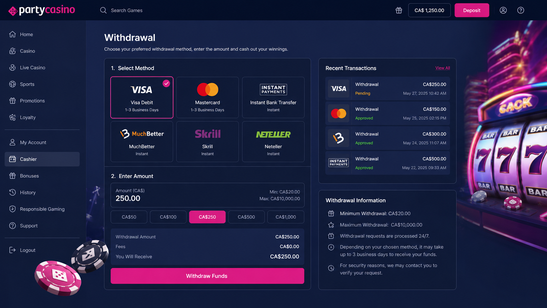
Players rarely judge a platform only by the games they opened. They remember whether the whole journey felt manageable from the first deposit to the final payout. Imagine finishing a session with a win and already knowing that your account is verified, your method is active, and your limits were set before play even began. That is why the smartest approach is practical: register carefully, verify early, choose a method that fits your routine, keep limits realistic, and treat promotions as optional value rather than a reason to overspend.
If you are in Canada and considering Partycasino in 2026, focus on the steps you control. Prepare your account before the first request, keep records of transactions, and use safer play tools before emotion starts steering the session. Usually, the smoothest payout experience is built long before you press the cashout button.